Saturday, September 17, 2011

Language And Violence And Sex, Oh My!


When it comes to children, the biggest concern parents have in exposing their children to a movie is the content of the film. Most notably, their looking for sex, violence, and language. The more of these a film has, the less likely they'll allow their kids to see it. But how do they prioritize the content? Does one become more forgiving than the other. And how does one gauge how much is too much, and when it crosses that line? 

Let's take a hypothetical scenario. Three movies are released simultaneously: 
Movie A contains no violence or sexual content. Yet it does have an unacceptable amount of language. 
Movie B contains no violence or unacceptable language, but does contain nudity and sexual content. 
Movie C has no nudity, sexual content, or unacceptable language, but plenty of violence.

Now, as a parent, you find out over the weekend your child went with a friend and saw one of these films. To which movie do you fear the most him or her seeing? Which one is the least of the three evils? And then, why? 

Movies with nudity and sexual content tend to fall in one of two categories. Sophomoric adolescence in which sex is pursued for its own sake, and nothing more. Revenge of the Nerds, Porky's, and American Pie would certainly fall into this category. Other films use sex to convey a deep connection between characters. These are scenes of intimacy, love-making, and bonding. The sex scene in An Officer and a Gentleman is an example of this type. Yet, is one preferable to the other? Is one more appropriate than the other? And does age matter? My personal experience, I was given "the talk" at the early stages of puberty. As my body underwent changes, my parents put it in context for me. Still, I can honestly tell you, perspective or not, I gravitated more toward the Porky's type of films than An Officer And A Gentlemen. It didn't matter if I was 13, 17, or 19. Still, I have to wonder, if I were exposed to these films and thus the talk came sooner, say 10 or 11, would my curiosity be even more warped, or would my appreciation for sexuality be more mature by age 18? I also believe it's naive and foolish to believe that our kids will be fish-bowled from seeing these films, considering the wealth of access and outlets available today. Between the big three, sex and nudity is the most positive force. Violence leads to injury and death. Language can come off as crass and ignorant. But sex and nudity are "natural." It's the driving force behind life itself, and should be appreciated. Yet, such a powerful force requires discipline. Unwanted babies, abortion issues, incest, sexually transmitted diseases, teenage pregnancies are just a few symptoms of this driving force gone unchecked. So, when it comes to letting children watch movies with this subject matter, is it better to shield them, or make it apparent, putting it in proper context?

Violence in film is almost unavoidable. Call the genre what you will, Comedy, Horror, Sci-Fi, they all share one thing in common, they follow the Dramatic formula. In a drama, there is conflict, and violence is a representation of that dramatic effect. Like sex, there are two schools of thought, fantasy and realism. Films like Hook, Spider-Man, and Teenage Mutant Ninja Turtles are filled with violent action, but are often given the PG stamp of approval, due to little to no blood, maiming, or death. Movies like Saving Private Ryan and Schindler's List show realistic violence, and the results of violence, ie: blood and death. These films are rated R for their graphic realism. Yet, in a culture which demonizes video game violence, which is presented in an unrealistic manor, citing children who imitate the violence into the real world, one wonders if the ratings should be reversed. Is allowing children to see violence without the realities associated with it better than the truth? Would kids emulate the violence they see in film, knowing that people suffer. Not just those wounded and killed, but their friends and family. There is no reset button. Limbs don't grow back. Children are left Fatherless. Watching mutated turtles plow threw a hundred ninjas without a scratch is a context that can only glorify violence in the hearts and minds of the young. Yet, one cannot deny that violence in and of itself is evil. In fact, through violence comes honor, respect and courage. If we learned anything from the Rocky films, it's that it isn't that you fight, it's what you're fighting for. To consider Rocky a "boxing film" is to be short-sighted. The boxing is the metaphor. It's about the conflict a man faces to prove his self worth, his identity, and to find his courage. In the Chronicles of Narnia: The Lion, The Witch, and the Wardrobe, the four kids escape the horrors of World War 2, only to be whisked away into a fantasy realm where they are involved in an epic fight between good and evil. This film neither glorifies or condemns war. Rather, it illustrates a time and place when people must make a stand in defiance of evil.

Language is a funny thing. Naturally, there are certain words which are red flagged. F*ck, Sh*t, P*ssy, Assh*le, are universally regarded as vulgar and can attract an R rating like a bog zapper attracts moths. The problem lies in the gray areas of the English language, which there are no hard and fast rules. On television, films run an exhaustive gauntlet of standards and practices. Certain words bleeped on one channel is allowed on another. Some consider context, while others are strictly verbiage. The saying we all knew growing up, "Sticks and stones may break my bones, but names will never hurt me", is apparently a lie. Words like fag is often bleeped. Used to disparage an entire culture, I can understand. Referring to cigarettes, its ludicrous. A fine example is a scene in the film Rock Star. Mark Wahlberg's character is flown from Pittsburgh to Los Angeles and arrives at the recording studio home of rock band Steel Dragon. The band, all Englishmen, greet Mark and ask him if he's fagged out from the flight. This is obviously meant "Are you tired from the flight?" The word is appropriate due to context, but is bleeped by censors who hold fast to strict rules. Later, in the same scene, the real singer shows up, who's just been fired from the band, as it turns out he's gay. One band member says "like we give a toss who you're buggering." In this context, he is effectively saying, "we're not jerking it to the idea of who you're f*cking in the a$$." Pretty profane in context. But because censors see nothing wrong with the words "toss" and "buggering", it's passable. Some don't allow the words, "Retarded", "God", and "Honky" no matter the context for fear of offending someone. Even the deadly words like "f*ck" get alternative rules. For example, you can have the "F" word in a film without gaining an R rating if the word is used as an expletive and not as a sexual reference.

In the above hypothetical, it seems that in the television world, movie C is the least concerned. While language and nudity are censored, they have no qualms about taking commercial revenue displaying violence, in whatever context. Yet, paradoxically, of the three, it leads to the most dangerous behavior. But where do you stand? What are your priorities, and how and when do you feel what is appropriate for your child and when? Furthermore, do your values and sensibilities give you the right to impose them upon others? If not, than do censors and the MPAA have that right? What gives them that right? And what makes their opinions more valued than yours?


Thursday, September 15, 2011

F-Bombs in PG and PG-13 Movies


Bill has already touched on the worthlessness of the movie rating system but I'd like to focus on one aspect in particular: The F-Bomb. As swear words go, this is the big one. Culturally, we are very sensitive to the use of this word. Or, at least, we were at one time.

I read an article recently that analyzed the use of F-Bombs. By the MPAA's Classification and Rating Administration's guidelines a film may still be rated PG-13 if it has one non-sexual use of the F-word.

Then how do they explain the numerous PG-13 movies that use the F-word more than one time? Recent PG-13 movies to include more than one F-bomb include "Transfomers: Dark of the Moon," "The Social Network," "The Tourist," "Crazy Stupid Love," and "Larry Crowne." Not to mention PG movies such as "Big" and "Beetlejuice" that include the F-word. Apparently, the raters can vote to overrule the rules, meaning they can assign any rating to any film irregardless of the film's content as long as two-thirds of the raters agree.

Frankly, this is simply absurd. I realize that there's lots of gray area in rating a film but either the ratings are meaningful or not. As a parent, I do not want to take my children to a PG movie and have them exposed to the F-word! It makes me upset enough that there's mild cursing in even G films.

Personally, I find websites such as http://www.kids-in-mind.com/ and http://www.parentpreviews.com/ much more informative than the MPAA rating. Websites such as these are extremely detailed. They rate a film according to its violence, sexual content, language, and other potentially offensive or suggestive categories such as drug and alcohol use. Each category is rated separately which allows the parent to make a truly informed decision.
 

Tuesday, September 13, 2011

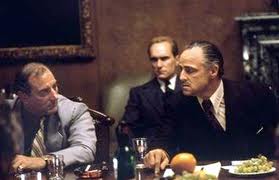
Waiting For Godfather


Where have all the good mob movies gone? Is the golden age of the on screen mafia finished? If not, to whom do we turn? Certainly De Niro, Paccino, and Pesci can't carry the torch forever.

I honestly cannot say that there has been an epic mob film in the last 10 years. The Godfather Trilogy, Scarface, A Bronx Tale, Goodfellas, Casino, Bugsy, and The Untouchables have romanced audiences with stories of violence, power, respect, family, and lawlessness. Mob films are a genre unto themselves, the 20th century version of Westerns. In fact, Westerns and Mob Movies have a lot in common. It's the law vs outlaws, brutal justice, plenty of gun play, and men forging their own destinies. But America's love affair with the Western comes and goes. John Wayne and Clint Eastwood dominated Westerns back in the day. Then, after a lull in the genre, we see Young Guns, Tomestone, Wyatt Earp, and Dances With Wolves herald in a new era. Is this the same with Mob Movies? Was there a golden era, and is that era going to return?

Whether based on real life characters like Bugsy and Henry Hill, or fictitious stories like Casino, Mob Movies attracted audiences like flies to honey. But in order to pull this off, there had to be a synergy between brilliant screenplays, directors like Martin Scorsese, Warren Beatty and Francis Ford Coppola who respect and treat the source material with great care, and actors like De Niro, Joe Pesci, Ray Liotta, and Al Pacino who's natural persona's and on screen chemistry can pull off convincing and compelling characters. This formula has created several compelling films, and dominated the industry with Academy Award nominations and wins. With the original Godfather released in 1972 and Casino released in 1995, if Mob Movies had a golden age, this would be it. Since 1995 it seems, Hollywood shifted focus, with Sci-Fi dominating the box office. Here, we've seen the release of a special edition of Star Wars, an entirely new Star Wars Trilogy, The Lord of the Rings Trilogy, and a slew of Superhero films. As they ask in the Westerns, "Ain't this town big enough for the two of us?"

Apparently not. Some films like Donnie Brasko (1997) and The Departed (2006) have attempted to keep the fire burning, but have not scored the success, nor stood out, like their predecessors. Other films like Pulp Fiction, Reservoir Dogs, and A History Of Violence have gangster themes, but these are tales told in a modern context. Audiences seem more interested in the bygone era's of the Mob. Clearly, there are distinctions between gangster movies, and mob movies.

As we enter a second decade removed from the Golden Era, where do we turn? Who are the directors that will romance us like Scorsese and Coppola? Who are the actors that will keep us glued to our seats? A few actors from the Soprano's could be cast to type, but hardly worthy of a lead role. try and imagine being tasked as a casting director for a remake of the Godfather. Who would we cast as Michael Corleone? Matt le Blanc? Johnny Depp as Fredo? There doesn't seem to be anyone in Hollywood, either as an up and comer, or an established star, that could pull off a convincing "Made Man."

Again, like the Western, the Mob Movie genre seems to be headed off into the sunset, but it will return again, someday.


Sunday, September 11, 2011

Selecting a Theater: Pay for the Seats

Of course, there are multiple factors to be considered when choosing a movie theater. How far is it from home? What are the ticket prices? What are the crowds like in that area? But the one feature that I truly measure a movie theater by are the seats.

Movie theater seats have come a long way in the last twenty years. I remember when they were narrow, half-backed, thinly cushioned, and the row in front of you was only an inch or two lower than yours. Some theaters still have seats like this. I understand why theaters had these seats - the more people you can pack into a theater at a time the more tickets you can sell. But people aren't going to a theater to sit on a little bench like they were attending a Penn State game at Beaver Stadium! I avoid theaters with these old seats at all costs! I'd rather pay more and drive further to sit in a full-backed, plush, recline-able, wide-seated chair that is neatly arranged in stadium seating. After all, thanks in large part to home theater systems where somebody can watch a 3D high-def picture in their favorite recliner, theaters are now tasked with making the experience of watching a movie in a theater a premium one.

The one area I think theaters can still improve the seats in is the armrest. First of all, the armrest needs to be able to come up. When I go to a movie theater with my wife, I walk to be able to have her snuggle up with me, put my arm around her, or hold her hand. An immovable armrest gets in the way of that.

Armrests should also be wider. It bothers me to sit next to someone who takes up the whole armrest. Sometimes the people on both sides of me take both armrests and I'm left hugging myself for the entire movie! Why not create a double armrest so that each patron has an armrest all to themselves on either side of them? This wider armrest could accommodate a double cup holder. Perhaps a fold-up or fold-out tray would be nice as well. This would encourage people to purchase things like nachos and hot dogs. Who wants to hold a tray of nachos on their lap during the movie?

And while we're at it - can I have something to put my feet up on if it's not to much to ask? That way I'll be almost as comfortable as I am at home in my recliner as I watch films on my home theater system.
  

Thursday, September 8, 2011

Critic's Cafe: Bill's Movie Evaluation Criteria


So what does it mean to label a film as "good" or bad"? Is there a certain criteria that has to be met? Is that criteria universal?

Let's be clear, when engaged in conversation with friends and associates regarding a film, inevitably someone says that, "_______ was a good film", or "______ was a bad film." But that isn't a true or honest critique. What they're really saying is that they either liked or disliked a film. So how do we properly apply the terms of good and bad to a film, regardless of personal preference? We start by defining the terms good and bad. Like anything else, "good" is a term applied to something that does what it is expected, or intended, to do. "Bad" is when something fails to do what is expected or intended. For example, a meal may be considered good, if it is well balanced, provides essential vitamins, is nutritional, and does not contribute to high cholesterol or weight gain. A bad meal is one of little to no nutritional value. It raises cholesterol and fat in the body, leading to ongoing health problems. Yet good or bad have nothing to do with a meal's preference. We all enjoy a tripe-cheese pizza, but it is "bad" for us. Same with film.

For me, this begins and ends with the narrative. Simply put, the narrative is story which the movie is trying to tell. Embedded in each narrative, and arguably just as important, if not more so than the story element, is the intention of the narrative. What is it trying to convey? The intentions of the narrative can be many things. A narrative may simply have entertainment value. These movies are generally not thought provoking, but allow the audiences to escape their world for a couple of hours and simply enjoy the moment. Some narratives look to elicit an emotional response. Some people may say of a film, "I had to see this movie, I just needed a good cry." Narratives that resonate with deep emotional content connect with audiences in a more profound way than a simple "popcorn flick", which only entertains. Other narratives look to challenge the audience's thought process. Films like these look to raise awareness of cultural or social issues, challenge their moral and philosophical notions, or expand their aesthetic awareness. A film's narrative incorporates one, and often times more, of these intentions.

Of course, there is a virtual cornucopia of elements that go into a film that if not executed properly, can detract from the narrative so much, the narrative gets lost, and thus becomes a bad film. Chief among these elements are:

Direction: Like a coach in a football game, the responsibility lies on the shoulders of the director. It is his job to  put the pieces together and complete the picture. This position has often proved that it isn't just the story that's important, but how it's told. That alone doesn't make a film good or bad, but would radically alter how the narrative is delivered. Consider what Star Wars would have been if originally directed by Quintin Tarantino. What if Jerry Bruckheimer had directed Schindler's List? Good or bad, these narratives would have been told completely different than the version we're used to. So matching a screenplay with the right director is important. But once the director is chosen, his techniques and sensibilities are paramount in how the narrative comes across. Dialogue, lighting, sound, camera angles, pacing, and choice of soundtrack are but a few of the many seasonings these chefs use in their kitchen.

Acting: Since most films involve people (even animated films require voice acting), it is the job of the actors to make their characters real, engaging, relatable and believable. The lead roles are usually what drives a film, but even for films where characters are not essential to the narrative, they still play a vital role in the films momentum. Like selecting the right director, casting is important. Times have shown that even bankable actors have been the wrong choice, and sometimes casting an unknown have propelled the film to unexpected heights. Superman: The Movie is a prime example.

Continuity. How many times have we noticed a scene where a glass of water mysteriously changes position several times, or the volume of water goes from full, to 1/2 empty, back to full again. These are called continuity errors, and plague every film to some degree. This is the result of multiple shots, multiple takes during a scene. But that's not the continuity I speak of. What I refer to is the continuity that a film establishes for itself, than violates it. This happens a great deal in sequels. Christmas Vacation, for example, for the sake of story, alters Rusty and Audrey's respective ages. Rusty was always the older sibling except for this installment. Spider-Man 3 sees Peter Parker blindsided by the New Goblin, yet it was established in the first film that Spider-Man has "Spider-Sense", an almost precognitive ability that keeps him from being harmed from unseen dangers.

Sight, Sounds, Action. Costumes, sets, props, settings, visual, and audio effects also contribute greatly to propelling, or hamstringing, the films narrative. Sometimes effects can be so vivid, that they become the story. Avatar's breathtaking scenery, costumes, and special effects took an often retold plot and breathed considerable new life into it. Other times, bad props and sets can detract from an otherwise compelling plot.

Ultimately a "criteria" in and of itself isn't used, by me anyway, to determine a films worth. Indeed, the concept of checking boxes off a virtual checklist of whether a film scores a pass or fail is really a disservice to the film, as each film should be held in its own regard. I'm not going to penalize Police Academy for its unrealistic characters because its a comedy, and the farcical nature of the characters is whats central to the film. I'm not going to withhold appreciation of the film Up because it's scientifically impossible for helium balloons to rip a house from its foundation. It's a children's fantasy film that caters to their imagination. What I look for is what the films narrative is and how it's crafted. Then, are there any detracting components that prevent the film from telling the audience what it needs to convey. Did the audience lose their escapism? Does the plot make sense? Did they leave with a sense of disappointment? Were the events believable in the context they were presented? Added up, did this all overshadow the purpose of the film? If so, than it was a bad film. If not, it was a good film.

Notice my use of the words "they", "Audience", and "their"? This is essential to keep in perspective when critiquing a film. If one critiques a film with "I didn't this", or "I find that", than pure objectivity is lost, and personal preference comes into play. Of course, I am one man and cannot speak for all. So I have to analyse  my own reaction, and compare its objectivity to my personal preference. So I will often follow up a statement in conversation of a film being good or bad with "I liked it", or "I hated it", to give a clear distinction between a  films performance and my preference. Regardless, the very nature of critiquing a film will always have objectivity tarnished by personal preference. The goal is to minimize personal preference as much as possible. What I find as a detractor may be forgivable by me, but to someone else it might be the deal-breaker. For example, I am a fan of the film Armageddon, due to its strong cast and depth of characters. The narrative is a bunch of every day Joe's are tasked with saving the world from a comet large enough to destroy all life on the Earth. To me, the character element is more important than the premise, which is scientifically unsound, bordering on ridiculous. Yet, I can overlook these flaws when viewing the bigger picture. Other's find the premise too absurd to be taken seriously, and cannot. Again, they say it's a bad movie, but is it "bad", or just disliked? If the narrative was to tell the story of an Earth killing comet in the parameters of true aerospace physics, and a realistic natural progression of events,than yes, it is a bad movie cause the narrative is lost. This type of narrative clearly is meant to be thought provoking. But Armageddon's narrative was for pure entertainment value, and to be inspiring in its characters and theme. It was, and therefor a good film. Perhaps not a film everyone will like, but certainly not a bad film.

I hope this has offered insight into my reasoning and opinions on evaluating a film from a critical point of view. See you at the movies.


Critic's Cafe: Scott's Movie Evaluation Criteria

So, how do I evaluate a movie? I know what I don't do - and that is rely on anything outside of the movie such as friend's opinions, critic's ratings and awards earned. Those things are only helpful to me in selecting which movies I see. So what factors determine if I enjoy a film or not?
  1. Most important is believeability. I don't care how awesome the action sequences or character moments are - If I don't believe that they're plausible then the film lost me. For example, in Speed when the bus jumps across the gap in the road without falling below fifty five miles per hour they lost me. Now, this doesn't mean that I don't enjoy fantasy and science fiction with the best of them. But a film has to obey its own internal logic. So when, at the end of Transformers, the Allspark shrinks down from the size of a building to the size of a football the movie lost me because it didn't fit with the entire film's mass-retention principle.
  2. Next is emotional impact. It really doesn't matter what emotion it is - it could either be humorous, uplifting, or sad. If a film moves me emotionally I think much better of it. I cry at the scene in Apollo 13 when the pregnant wife watches the astronaut going into space for the first time. I can't make it through the scene in Forrest Gump when he's standing at Ginny's grave without crying. Meanwhile, Office Space, Dirty Work, and Road Trip crack me up. If a film can make me care enough to be moved emotionally I know its a good one.
  3. Another thing I look for in films is if they are thought provoking. That doesn't mean I want to be preached at or told a story with a social, ecological, or political agenda. But I like it when a film gives me reason to think more deeply on a topic or to see an issue in a new light. Back to the Future caused me to think about how time travel works. The Good Son had me thinking what I would do if I was in that mother's place with two children's lives in my hands and only one can survive. When the experience of watching the film doesn't end with the final credits, that's an indicator that it was a quality film.
  4. Rewatchability is also very important to me. Sure, I saw Schindler's List in the theater and loved it but when I bought it and watched it again I couldn't drag myself through it a second time. It's a special thing when you can find enjoyment in a film even when you know every secret, every surprise, and every line of dialogue. I loved Tim Burton's Batman when I saw it in the theater but it just seemed tedious when I watched it again while The Wizard of Oz remains a timeless classic that I've watched dozens of times.  
  5. Of course, I examine the technical aspects of film making such as acting, pace, lighting, shot composition, and special effects. Poor acting can kill a film almost as fast as poor directing. A truly monumental performance, on the other hand, can significantly improve my opinion of a film. Special effects, to a certain degree, apply back to the believeability of a film but I also think they're a distraction aspect to them as well. If I notice either a good or bad special effect and it takes me out of the experience of watching the film that's a bad thing. On the other hand, if they're integrated seamlessly into the fabric of the story then that's to the film's credit. I honestly didn't notice the CGI shots in Fight Club until I watched the bonus features on the DVD and they were pointed out to me. Bravo!
  6. Finally, I can't totally discount star power and property value. I find myself being more willing to forgive the faults of a film if it features one of my favorite actors such as Denzel Washington or Harrison Ford. A film based on a pre-established property, however, can affect my judgment both for the good and for the bad. I find that I'm particularly hard on films based on a property I love (such as Spider-Man or Star Wars). But if a film based on a property I love is good, I find that my evaluation of that film is higher than perhaps it would have been if I wasn't already a fan.
So, there you have it. Believeability, emotional impact, thought provoking, rewatchability, technical aspects, star power, and property value are all factored in when I'm thinking about how much I like or dislike a movie.

Wednesday, September 7, 2011

Critic's Cafe: Movie Evaluation Criteria

Have you ever gone to seen a movie with a friend, walked out of the theater, and started talking about the movie with your friend only to wonder, "Did we even see the same movie?"

Your friend loved the action, you hated the action. Your friend hated the characters, you loved the characters.

It isn't that you saw a different movie but rather that both you and your friend look for different things in a movie. Part of this is personal preference but there are also a variety of other measures each of you use you measure the quality of a movie.

So tomorrow, here at R2R, both Bill and Scott are going to be lifting the curtain to reveal the criteria each of them uses to personally evaluate a movie. See who you agree with more!